One of the oddest aspects of the US government’s reaction to 9/11 was its almost immediate decision to consult Hollywood. From October to December 2001, the Bush administration initiated a series of meetings between Washington officials – most notably senior adviser Karl Rove – and entertainment industry executives and creatives, with the aim of forming an ‘arts and entertainment taskforce’.
According to White House spokesman Ari Fleischer, the administration would ‘share with the entertainment community the themes that are being communicated here and abroad: tolerance, courage, patriotism’. Although Rove insisted that the goal was not to produce propaganda, he reportedly ‘invoked the industry’s role in the patriotic ardor of World War II’, and outlined a number of messages that entertainment products should try to convey, including: ‘Americans should support US troops and their families’, and ‘The war is a war against evil’.
The plan for an ‘arts and entertainment taskforce’ is reminiscent of the 2004 comedy Team America: World Police, directed by South Park’s Trey Parker, in which the elite ‘Team America’ counterterrorism unit is obsessed with actors and acting. The unit’s leader tells the main character, Gary, for example: ‘The team went on a mission without you, and without an actor they were like pigs to the slaughter.’ Gary’s thespianism ultimately saves the day, naturally, as the team defeats not only the terrorists and their state sponsors, but also armed antiwar celebrities who are equally convinced of the strategic importance of their ‘acting skills’.
Yet while there was something faintly ridiculous about the Bush administration’s concern with the world of entertainment in the wake of 9/11, this apparently trivial aspect of the ‘war on terror’ decade reveals something about the politics of the era.
A ‘void in meaning’
One reason for the official overtures to Hollywood was that, as Frank Furedi has argued, the job of combating terrorism was seen not as a matter of sober threat-assessment and patient information-gathering, but as a task of the imagination. If counterterrorism is understood in terms of ‘imagining evil’ and dreaming up nightmare scenarios, then seeking help from movie-makers would seem to make sense (1).
Just as important, though, was the fact that political leaders seemed to lack an adequate vocabulary through which to make sense of the attacks. As international relations scholar Jack Holland argues, an elite ‘failure to narrate’ – to place the attacks in a meaningful context and explain their significance – created a ‘void in meaning’ that exacerbated the disorienting impact of the disaster. Into this void stepped film and TV drama, not so much following an official propaganda line as joining the search for a meaningful response. Holland’s example is The West Wing, which aired a special episode on 3 October 2001 explicitly teaching the audience how to understand and respond to terrorism – in part by equating ‘Islamic extremists’ with the Ku Klux Klan and comparing the Taliban with the Nazis.
Critics have noted how another popular TV drama, 24, seemed to strike a chord with both political leaders and military personnel, including those involved in the interrogation of ‘enemy combatants’ at the Guantanamo Bay detention centre. The show’s protagonist – torture-happy counterterrorism agent Jack Bauer – figured in classroom discussions, think-tank deliberations and even election debates. As terrorism analyst Brigitte Nacos has pointed out, when New York police commissioner Ray Kelly announced the arrest of the would-be Times Square bomber in 2010 he couldn’t resist comparing himself with Bauer.
These shows tended to take a patriotic stance, but they hardly needed any prompts from the Bush administration to do so: in 24’s first season, starting in November 2001, it was the 1999 Kosovo conflict that provided the topical villains for Bauer to vanquish; while The West Wing had closely mirrored official foreign-policy positions well before 9/11. In turning to the ‘entertainment community’, US leaders were concerned less with imposing an official doctrine than with drawing on the imaginative resources of film- and programme-makers to help construct a meaningful narrative about 9/11 and the ‘war on terror’.
‘Spiritual failure’
By and large, however, Hollywood cinema did not come up with heroic tales to boost morale at home and improve America’s image abroad. In 2008, by which time several films dealing with the ‘war on terror’, and particularly Iraq, had been released, the New York Times reported that although the global popularity of US entertainment was greater than ever, America’s image in other countries had actually worsened since 2001. If Hollywood movies had any influence on those perceptions, it was surely a negative one.
Far from engaging in myth-making, recent war films have often tended to be highly self-conscious about misleading media images of war, most pointedly in Brian de Palma’s Redacted, which is made up of a patchwork of different perspectives. Hollywood has offered us images of torture and atrocity (as in Rendition or Redacted), plotlines focusing on US troops committing psychotic violence against civilians and fellow soldiers (In the Valley of Elah), and dark conspiracy stories in which the US government colludes in crime, violence and corruption (Syriana, Green Zone). As one critic puts it, such films ‘overwhelmingly focus on aspects of American failure – military, political, diplomatic and also spiritual failure’.
US audiences mostly stayed away from Hollywood’s liberal antiwar polemics. Sitting through Robert Redford’s Lions for Lambs, one of the few films to deal with the Afghan conflict, it is not difficult to see why. The film adopts a hectoring, didactic tone (personified in the Vietnam-era university professor played by Redford), casting the younger generation (his students) either as naive victims of US policy or as politically apathetic careerists.
Us and them
Filmmakers have had some difficulty in constructing compelling pro- or antiwar narratives. One problem has been the depiction of baddies. The first of Rove’s bullet-point messages to the industry after 9/11 was that ‘the war is against terrorism, not Islam’ – a point also highlighted in the internal editorial guidelines issued by the BBC in September 2001. Indeed, critics have noted that the depiction of Arabs and Muslims in US cinema has been more nuanced and even-handed since 9/11 (2).
Yet saying who the enemy was not proved to be much easier than saying exactly who the enemy was – especially when concerns about offending or inflaming Muslim opinion coexisted with fears of ‘homegrown’ Islamist terrorists. President George W Bush’s line, that the target was ‘evildoers’, was too simplistic even for an industry used to dealing in black-and-white tales of good vs evil: films like Traitor sought instead to understand the motivations and grievances of suicide bombers. In the process, of course, the baddies have often turned out to include CIA agents, oil companies, and unscrupulous and/or inept Western politicians.
The sense of ‘spiritual failure’ has meant that an even greater problem than how to portray the enemy other has been the question of how to depict the Western self. One of the more commercially successful Iraq war films, the Oscar-winning The Hurt Locker, offers an image of heroism of sorts, but only in so far as the protagonist (a bomb-disposal expert) is a humanitarian, concerned with saving lives rather than waging war. Even then, the ‘hero’ is someone so psychologically damaged that he recklessly endangers his men and cannot return to normal civilian life.
Perhaps the most common overall theme in Hollywood’s version of contemporary war is that we are all victims – whether Muslims driven to desperate extremism by Western foreign policy, civilians caught up in random acts of violence, coalition soldiers suffering from ‘post-traumatic stress disorder’, or TV audiences kept in ignorance by mendacious media. In highlighting trauma, vulnerability and victimhood, Hollywood has captured the spirit of the age, albeit in dispiriting fashion. No doubt that is not quite what US officials hoped for back in 2001, but neither does it offer any sort of inspiration to opponents of war.
(1) See Invitation to Terror: The Expanding Empire of the Unknown, by Frank Furedi, Continuum, 2007
(2) p38, Guilty: Hollywood’s verdict on Arabs after 9/11, by Jack Shaheen, Interlink Books, 2008


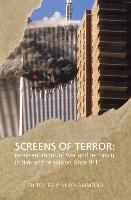
 Vol. 4, No. 2, 2011: special issue on the war on terror in news & popular culture, edited by me and Graham Barnfield. You can read our introduction here.
 Published on spiked today...


 I'm chairing this conference on representations of war and terrorism since 9/11 in film, TV drama & documentary.
 My review of Faisal Devji’s The Terrorist in Search of Humanity is published in German in this month’s Novo Argumente magazine. The English version is available here.


