Showing posts with label film. Show all posts

Monday, 19 May 2014

Films & Climate Change

'Bridging the Political Deficit: Loss, Morality, and Agency in Films Addressing Climate Change', coauthored with Hugh Ortega Breton is now available in an 'online first' version.

It's coming out in Communication, Culture & Critique in the autumn.

The article examines the emotional rhetorical strategies of 3 films—The Day After Tomorrow (2004), An Inconvenient Truth (2006), and The Age of Stupid (2009)—that attempt to create engagements with the 'post-political' problem of climate change. In all three films the experience of personal loss, the potential for future loss, and the emotions associated with loss are fundamental to affective engagement. The emotional loading of representations of environmental problems derives partly from concerns about human political agency and subjectivity. It is not so much that emotional or moral appeals are simply added on in order to bolster a political message, but rather that autobiographical narratives of loss and morality occupy the space once dominated by modernist forms of politics.

Thursday, 19 September 2013

The Wide Angle: Eco films & Emotionalism


My second appearance on The Wide Angle -- and another interesting conversation.

Monday, 10 June 2013

Melancholia: Imaging the End of the World


Just back from this very interesting conference.  My paper, with Hugh Ortega Breton, was on 'The Eco Apocalypse'.

Sunday, 21 April 2013

The Wide Angle: Comedy & the war on terror


I enjoyed taking part in this programme -- the first of a new series from WORLDbytes.

Friday, 25 May 2012

Don’t Panic! The Apocalypse in Theory and Culture

Speaking at Skepsi’s Fifth Annual Interdisciplinary Conference, Don’t Panic! The Apocalypse in Theory and Culture today, giving a joint paper with Hugh Ortega Breton on 'Loss, Alienation and the Desire for Annihilation: Phantasies in the Politics of the Eco-Apocalypse.

Wednesday, 11 January 2012

MeCCSA 2012


Speaking at the annual MeCCSA conference today: a joint paper with Hugh Ortega Breton, on ‘The Emotional Engagements of Environmental Television and Film’.

Thursday, 29 December 2011

Reconstruction


Graham Barnfield and I have edited a special supplement to Reconstruction Vol. 11, No. 4, on 'War on Terror by Other Means: The Media Industries after 9/11'. Read our introduction here.

Friday, 9 September 2011

Screens of Terror

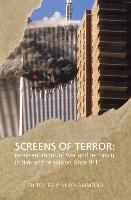
Screens of Terror: representations of war and terrorism in film and television since 9/11
Abramis Academic, September 2011. 338pp.
ISBN: 9781845495015. Order a copy here.

Edited by Philip Hammond, with contributions from: Matthew Alford • Martin Barker • Graham Barnfield • Michael Frank • Brigitte Nacos • Jack Holland • Hugh Ortega Breton • Joe Parker • Fran Pheasant-Kelly • Rebekah Sinclair • Mark Straw • Liane Tanguay • Guy Westwell • Bernd Zywietz

'No other collection to date has so acutely, intelligently and coherently demonstrated the inseparability of information, entertainment, policy and public perception as prime vectors of "war on terror" discourses and sensibilities as these are represented in Hollywood products. If I had to choose a single source to interrogate the limitless suffusion throughout Hollywood texts of Hegemonic gaze and subjectivity – regardless of genre, whether "critical" or "mainstream" – it would be Screens of Terror.'
- Oliver Boyd-Barrett, Professor of Journalism & Telecommunications, Bowling Green State University

'A compelling and timely interrogation of contemporary images of terror, this book has much to offer everyday consumers of popular films and television, be they students or casual readers.'
- Cynthia Weber, Professor of International Relations, University of Sussex

Wednesday, 7 September 2011

Where did all the goodies and baddies go?

Published on spiked today...

One of the oddest aspects of the US government’s reaction to 9/11 was its almost immediate decision to consult Hollywood. From October to December 2001, the Bush administration initiated a series of meetings between Washington officials – most notably senior adviser Karl Rove – and entertainment industry executives and creatives, with the aim of forming an ‘arts and entertainment taskforce’.

According to White House spokesman Ari Fleischer, the administration would ‘share with the entertainment community the themes that are being communicated here and abroad: tolerance, courage, patriotism’. Although Rove insisted that the goal was not to produce propaganda, he reportedly ‘invoked the industry’s role in the patriotic ardor of World War II’, and outlined a number of messages that entertainment products should try to convey, including: ‘Americans should support US troops and their families’, and ‘The war is a war against evil’.

The plan for an ‘arts and entertainment taskforce’ is reminiscent of the 2004 comedy Team America: World Police, directed by South Park’s Trey Parker, in which the elite ‘Team America’ counterterrorism unit is obsessed with actors and acting. The unit’s leader tells the main character, Gary, for example: ‘The team went on a mission without you, and without an actor they were like pigs to the slaughter.’ Gary’s thespianism ultimately saves the day, naturally, as the team defeats not only the terrorists and their state sponsors, but also armed antiwar celebrities who are equally convinced of the strategic importance of their ‘acting skills’.

Yet while there was something faintly ridiculous about the Bush administration’s concern with the world of entertainment in the wake of 9/11, this apparently trivial aspect of the ‘war on terror’ decade reveals something about the politics of the era.

A ‘void in meaning’

One reason for the official overtures to Hollywood was that, as Frank Furedi has argued, the job of combating terrorism was seen not as a matter of sober threat-assessment and patient information-gathering, but as a task of the imagination. If counterterrorism is understood in terms of ‘imagining evil’ and dreaming up nightmare scenarios, then seeking help from movie-makers would seem to make sense (1).

Just as important, though, was the fact that political leaders seemed to lack an adequate vocabulary through which to make sense of the attacks. As international relations scholar Jack Holland argues, an elite ‘failure to narrate’ – to place the attacks in a meaningful context and explain their significance – created a ‘void in meaning’ that exacerbated the disorienting impact of the disaster. Into this void stepped film and TV drama, not so much following an official propaganda line as joining the search for a meaningful response. Holland’s example is The West Wing, which aired a special episode on 3 October 2001 explicitly teaching the audience how to understand and respond to terrorism – in part by equating ‘Islamic extremists’ with the Ku Klux Klan and comparing the Taliban with the Nazis.

Critics have noted how another popular TV drama, 24, seemed to strike a chord with both political leaders and military personnel, including those involved in the interrogation of ‘enemy combatants’ at the Guantanamo Bay detention centre. The show’s protagonist – torture-happy counterterrorism agent Jack Bauer – figured in classroom discussions, think-tank deliberations and even election debates. As terrorism analyst Brigitte Nacos has pointed out, when New York police commissioner Ray Kelly announced the arrest of the would-be Times Square bomber in 2010 he couldn’t resist comparing himself with Bauer.

These shows tended to take a patriotic stance, but they hardly needed any prompts from the Bush administration to do so: in 24’s first season, starting in November 2001, it was the 1999 Kosovo conflict that provided the topical villains for Bauer to vanquish; while The West Wing had closely mirrored official foreign-policy positions well before 9/11. In turning to the ‘entertainment community’, US leaders were concerned less with imposing an official doctrine than with drawing on the imaginative resources of film- and programme-makers to help construct a meaningful narrative about 9/11 and the ‘war on terror’.

‘Spiritual failure’

By and large, however, Hollywood cinema did not come up with heroic tales to boost morale at home and improve America’s image abroad. In 2008, by which time several films dealing with the ‘war on terror’, and particularly Iraq, had been released, the New York Times reported that although the global popularity of US entertainment was greater than ever, America’s image in other countries had actually worsened since 2001. If Hollywood movies had any influence on those perceptions, it was surely a negative one.

Far from engaging in myth-making, recent war films have often tended to be highly self-conscious about misleading media images of war, most pointedly in Brian de Palma’s Redacted, which is made up of a patchwork of different perspectives. Hollywood has offered us images of torture and atrocity (as in Rendition or Redacted), plotlines focusing on US troops committing psychotic violence against civilians and fellow soldiers (In the Valley of Elah), and dark conspiracy stories in which the US government colludes in crime, violence and corruption (Syriana, Green Zone). As one critic puts it, such films ‘overwhelmingly focus on aspects of American failure – military, political, diplomatic and also spiritual failure’.

US audiences mostly stayed away from Hollywood’s liberal antiwar polemics. Sitting through Robert Redford’s Lions for Lambs, one of the few films to deal with the Afghan conflict, it is not difficult to see why. The film adopts a hectoring, didactic tone (personified in the Vietnam-era university professor played by Redford), casting the younger generation (his students) either as naive victims of US policy or as politically apathetic careerists.

Us and them

Filmmakers have had some difficulty in constructing compelling pro- or antiwar narratives. One problem has been the depiction of baddies. The first of Rove’s bullet-point messages to the industry after 9/11 was that ‘the war is against terrorism, not Islam’ – a point also highlighted in the internal editorial guidelines issued by the BBC in September 2001. Indeed, critics have noted that the depiction of Arabs and Muslims in US cinema has been more nuanced and even-handed since 9/11 (2).

Yet saying who the enemy was not proved to be much easier than saying exactly who the enemy was – especially when concerns about offending or inflaming Muslim opinion coexisted with fears of ‘homegrown’ Islamist terrorists. President George W Bush’s line, that the target was ‘evildoers’, was too simplistic even for an industry used to dealing in black-and-white tales of good vs evil: films like Traitor sought instead to understand the motivations and grievances of suicide bombers. In the process, of course, the baddies have often turned out to include CIA agents, oil companies, and unscrupulous and/or inept Western politicians.

The sense of ‘spiritual failure’ has meant that an even greater problem than how to portray the enemy other has been the question of how to depict the Western self. One of the more commercially successful Iraq war films, the Oscar-winning The Hurt Locker, offers an image of heroism of sorts, but only in so far as the protagonist (a bomb-disposal expert) is a humanitarian, concerned with saving lives rather than waging war. Even then, the ‘hero’ is someone so psychologically damaged that he recklessly endangers his men and cannot return to normal civilian life.

Perhaps the most common overall theme in Hollywood’s version of contemporary war is that we are all victims – whether Muslims driven to desperate extremism by Western foreign policy, civilians caught up in random acts of violence, coalition soldiers suffering from ‘post-traumatic stress disorder’, or TV audiences kept in ignorance by mendacious media. In highlighting trauma, vulnerability and victimhood, Hollywood has captured the spirit of the age, albeit in dispiriting fashion. No doubt that is not quite what US officials hoped for back in 2001, but neither does it offer any sort of inspiration to opponents of war.

(1) See Invitation to Terror: The Expanding Empire of the Unknown, by Frank Furedi, Continuum, 2007

(2) p38, Guilty: Hollywood’s verdict on Arabs after 9/11, by Jack Shaheen, Interlink Books, 2008

Wednesday, 8 September 2010

Screens of Terror

I'm chairing this conference on representations of war and terrorism since 9/11 in film, TV drama & documentary.

It starts tomorrow evening with a screening of the documentary Reel Bad Arabs and a Q&A with Dr Jack Shaheen, on whose work the film is based.

See the full programme here.

Monday, 12 May 2008

An iron fist in a velvet glove

Ever since Jerry Siegel and Joe Shuster conceived of Superman as a counter to the Nazi Übermensch in the 1930s, superheroes have always had an ideological meaning. The most recent comic-book hero to hit the big screen, however, seems to embody the search for meaning in contemporary US foreign policy.

Iron Man, the latest Marvel comic to be turned into a blockbuster, reworks a theme previously explored in the Spider-Man series – that ‘with great power comes great responsibility’. The idea echoes an influential strand of thought about how American military muscle ought to be used in the post-Cold War era of ‘ethical’ foreign policy. This time, however, it is given added piquancy by the film’s overt military context: Iron Man does battle, not with a Green Goblin or a Doctor Octopus, but with terrorists in a cave in Afghanistan.

Our hero, Tony Stark (played with panache by Robert Downey Jr), is an arms manufacturer whose company supplies the Pentagon with high-tech weapons for use in the war on terror. If that strikes you as an unlikely hero-figure, you’d be right: at the beginning of the film Stark personifies all that liberals love to hate about macho America. He is brash, arrogant, and thoroughly irresponsible. When he wins an award, he doesn’t bother to turn up for the ceremony. When a female reporter confronts him about the ethics of the arms industry, he beds her and then dumps her the next day.

Personal charm and fabulous wealth allow him to get away with such bad behaviour most of the time. Stark’s sole buddy, US Air Force Colonel James ‘Rhodey’ Rhodes (Terrence Howard), is the only one who confronts him about his fecklessness. As the two travel to Afghanistan to demonstrate Stark Industries’ new missile system, Rhodey urges him to mend his ways. But as they prepare to leave it is obvious that Stark won’t listen: he dismissively waves Rhodey away, telling him to ride in the ‘hum-drum-vee’ not the ‘fun-vee’.

As in his personal life, so in his business. Stark’s military philosophy, which he traces back to his father’s work on the Manhattan Project, might be described as pre-emptive deterrence: make a really big weapon, use it once, and, he assures the top brass, the bad guys won’t dare to come out of their caves. The flaw in this logic is brought home to him in Afghanistan when he realises that terrorists have somehow gained access to his missiles, using them to attack the Humvee convoy in which he is travelling.

The terrorists take him captive and make an Iraq-style hostage video – but Stark manages to build a prototype Iron Man suit that enables him to escape. Equally importantly, while he is a prisoner Stark has a moment of moral revelation. He sees that his hedonistic lifestyle has been devoid of meaning and that his patriotic business dealings have had unintended consequences. On his return to the US, he announces that Stark Industries will cease manufacturing weapons while he tries to work out a more ‘responsible’ direction for the company.

When an incredulous Rhodey derisively asks Stark if he has turned ‘humanitarian’, Stark has no answer. But in secret he is working on a new project, redesigning and upgrading the Iron Man suit. Once perfected, this allows Stark to answer the question with deeds: as Iron Man he returns to Afghanistan, locates the terrorists’ HQ, and blows up their stockpile of Stark Industries WMD. He also manages to prevent a Srebrenica-style massacre when he comes across a village where, with evidently sinister intent, the terrorists are separating out the men from the women and children. Iron Man successfully avoids causing any collateral damage and takes out the bad guys while saving the civilians they are trying to use as human shields. A one-man ‘revolution in military affairs’, Iron Man is the humanitarian-military fantasy – of precision weaponry in the service of ‘ethical’ objectives – come true.

The only problem is the baddies. The terrorists belong to an al-Qaeda-ish group called The Ten Rings. As an organisation, The Ten Rings is even less plausible than Stark’s apparent ability to design and manufacture a miniaturised power reactor in a cave, using scrap metal, while under constant CCTV surveillance. These ‘foreign fighters’ include Arabic, Pashto, Farsi, Russian and Hungarian speakers with no discernible motivation in common aside from a cartoonish desire for world domination. In a sense, however, this implausibility is one of the film’s more realistic touches.

Without wishing to give the plot away entirely, it transpires that the terrorists are mere stooges and that the real villain of the piece is US corporate greed. This is realistic, not, of course, because the wacky 9/11 conspiracy theories are true, but because the conflict the film dramatises is a real one: it is essentially the US elite at war with itself. Just like in real life, there is no plausible set of baddies against whom to practice hi-tech humanitarian militarism. From Saddam to Milošević and back again, hate-figures have generally had to be puffed up in the media like pantomime villains. In the absence of the Soviet threat, the US elite has spent the best part of two decades struggling, like Tony Stark, to find a ‘meaningful’ direction for post-Cold War foreign policy.

The point of ethical interventionism, which Iron Man tries to rehabilitate after the debacle of Iraq, was always to make Western societies feel better about themselves. As a feel-good action movie, Iron Man does the job as well as it possibly could under the circumstances, helped by super-cool special effects and an enjoyable will-they-won’t-they relationship between Stark and his prim personal assistant, Miss ‘Pepper’ Potts (Gwyneth Paltrow).

In the comics, Iron Man’s arch-enemy was Mandarin – a super-villain of Chinese descent who, surely not coincidentally, wore ten rings. Assuming that the search for plausible baddies will continue, it will be interesting to see what they come up with for the sequel.

Iron Man (dir. Jon Favreau, Marvel Studios) is on general release.

Published today, Monday 12 May 2008, at http://www.spiked-online.com/index.php?/site/article/5132/