Showing posts with label books. Show all posts

Friday, 10 October 2014

We need to rethink resilience

'Resilience’ has become a policy buzzword in recent years, apparently important to everything from mental heath to national security, unemployment to climate change. Last year an all-party parliamentary group even called for resilience to be taught in UK schools in order to promote social mobility. Yet as Frank Furedi has recently noted, ‘despite all the acclaim heaped on the concept of resilience it is far from evident what it actually means’. Resilience, he observes, is ‘a highly contested concept’.

David Chandler’s latest book, Resilience: The Governance of Complexity, suggests that part of the reason for this contested and confusing usage of the term is that the assumptions articulated through the concept of resilience have changed radically over the past decade or so. ‘A concept that started out as clearly distinguishing the subject and its inner strengths and capacities’, he argues, has now become ‘a concept which emphasises the interrelationship between subject and object’.

In its ‘classical’ usage, the idea of resilience emphasised the ability of individuals or communities to withstand the challenge of disasters or other tragic events. It rested on a conception of the human subject as robust and capable – a Robinson Crusoe figure who could draw on his own inner resources to bounce back from external shocks. In ‘post-classical’ terms, by contrast, resilience is not so much a property of autonomous individuals as of the systems or processes in which we are all understood to be embedded. A disaster or other unexpected event is seen as an opportunity for learning about those systems – a potentially ‘creative moment’ when ‘problems are brought into clear view’.

From this perspective, inculcating resilience means increasing our ability to reflect on our complex interconnections with the world and to become more adaptable. Discussing the lessons of Hurricane Katrina, for example, leading resilience policy advocates Brian Walker and David Salt argue in their 2006 book Resilience Thinking that local communities should have ‘embraced the processes of natural change rather than attempted to control them for short-term returns’, and should have been ‘given responsibility to learn to adapt to the changes happening around them’.

As suggested by the preference for adaptation rather than attempted control, the overall lesson continually drawn by resilience-thinking is that modern, liberal understandings of politics and governance are problematic and obsolete. Chandler’s central argument is that resilience-thinking is emerging as ‘the first post-liberal or postmodern episteme’; the first ‘coherent, positive, alternative to modernist frameworks of the subject and the world’. It is ‘positive’ in the sense that, instead of lamenting the loss of modernist understandings of politics, resilience approaches take their breakdown as ‘a positive gain; a realisation of a truth of the world, which we were somehow blind to before’.

This new ‘truth of the world’ is the ‘complexity’ referred to in the subtitle of Chandler’s book. Complexity theory and other, overlapping theoretical trends such as actor-network theory, new materialism and post-humanism, are increasingly influential across the humanities and social sciences. Complexity approaches are not making an epistemological claim, about our inability to know and predict patterns of cause and effect which are nevertheless understood to operate deterministically, but an ontological one: that the world itself consists of intersecting complex systems or processes in which we are embedded and which produce unpredictable effects and outcomes. The interactions of complex life are not simply chaotic or disordered, but neither are they knowable according to any linear cause-and-effect models. Rather, order is an emergent property of self-organising complex systems, and is knowable only after the fact.

Chandler dissects several examples of how such theoretical approaches are being mapped on to more practical questions by policymakers and advisers. Former Conservative Party adviser Dominic Cummings was at the centre of media controversy in 2013 when his draft briefing paper on education was leaked by the Guardian. Yet his advice – that both ‘established political philosophies’ and the ‘standard social-science model’ were now untenable as guides to governance, because they could not cope with systems which are ‘complex, nonlinear, and have properties that emerge from feedback between many interactions’ – is fast becoming the new conventional wisdom. At the opposite end of the (extremely narrow) UK policy spectrum, Institute for Public Policy Research writers Graeme Cooke and Rick Muir note that ‘social problems are situated within complex systems that are unsuited to mechanistic interventions. Rather than attempting to engineer outcomes through “command and control”, governments should focus on crafting the conditions for a variety of agents involved in a given problem to solve it themselves.’

To some, this kind of thinking might sound like just another version of neoliberalism: obliging individuals to fend for themselves, distrusting state planning and celebrating self-regulating markets. While there is some common ground, though, Chandler makes a convincing case that resilience-thinking is a new development, going beyond neoliberal thinkers such as Friedrich Hayek. Where neoliberalism counterposed market and state, resilience-thinking rejects both market and state rationalities; where neoliberalism still assumed the possibility of an external vantage point from which to intervene in complex systems, for resilience theory we are all embedded in a world of complexity.

Perhaps the most significant shift is that whereas for neoliberal thought, complexity presented a limit to universalist liberal reason and top-down planning, resilience-thinking sees complex life not as a barrier but as a means of governance. This shift was enabled, Chandler argues, by the ‘assimilation of critical sociological thought’, particularly as developed by the post-1968 left in France and Italy. In its rejection of the deterministic dogmas of official Marxism, the autonomist Left replaced hierarchical and linear understandings of power with an idea of power as non-linear, relational and ‘emanating from below’. For such post-Marxist thinkers – Michael Hardt and Antonio Negri spring to mind – there is no need for party or organisation, which would only be a barrier to the spontaneous self-activity of emergent social movements. Frameworks of democratic representation are disparaged in favour of participatory, ‘everyday’ democracy as enabling governance ‘through’, rather than ‘over’, society.

The assimilation of ‘critical’ perspectives leaves us in a bizarre situation where ‘critique…becomes the dominant discourse of power’. As Chandler explains, critique is the ‘mode of understanding’ of resilience-thinking: ‘it is critical of states (all forms of state power are seen to be a barrier to accessing the reality of complex life); it is critical of the market (its reductionist focus on profit and exclusion of “externalities”…); it is critical of universal, fixed and reductionist forms of thought (real complex life is fluid and ever changing).’ In such circumstances it is not enough simply to restate a modernist outlook, which is apt to appear quaint and nostalgic today. Instead, developing a genuinely critical response has to begin by engaging with the emerging new common sense of resilience-thinking, and by understanding how former assumptions about power and governance are being challenged and transformed today. That is Chandler’s significant achievement in this book.

Published today in October's Spiked Review of Books.

Tuesday, 2 September 2014

The Routledge Companion to British Media History

Published this week, with a chapter by me on 'The Media & Armed Conflict'.

Here it is on Amazon (UK).

Tuesday, 28 January 2014

The End of Journalism Version 2.0

A new edition of this collection is out this month, with a chapter on 'Objectivity, Objectification and the End of Journalism' by Andrew Calcutt and me.

Saturday, 5 October 2013

A Right to Offend


11am, Monday 21 October
Room B360
London South Bank University
Borough Road Building
103 Borough Road
London SE1

'Without the right to offend, free speech is a meaningless concept', argues Professor Brian Winston.

In recent years there have been a series of events -- from the Satanic Verses fatwa to the 'Hackgate' scandal -- that have brought into question the concept and practice of free expression. 

A Right to Offend provides an account of the current state of freedom of expression in the Western world, offering a deeper understanding of the increasingly threatening environment in which free speech operates and is defended, as well as how it informs and is central to journalism practice and media freedom more generally.

Brian Winston is Professor of Communications and holder of the Lincoln Chair at the University of Lincoln. A prize-winning documentary-maker, he was the founding chair of the British Association of Film, Television and Media Studies, and the founding director of the Glasgow University Media Group. Brian is a former governor of the BFI, and sits on the editorial board of the British Journalism Review. His numerous books focus mainly on documentary film, media technology, and freedom of expression.

This event is free and open to all, but booking is essential: please email cmcr@lsbu.ac.uk if you'd like to come.

Monday, 21 January 2013

Selling War

Out now --  Selling War: The Role of the Mass Media in Hostile Conflicts from World War I to the 'War on Terror', edited by Josef Seethaler, Matthias Karmasin, Gabriele Melischek and Romy Wohlert, and published by Intellect (UK) and the University of Chicago Press (US).  My chapter is on 'The Media and Humanitarian Intervention'.

Available from Amazon (UK) / Amazon (US)

Thursday, 20 December 2012

The Politics of War Reporting: A Critical Symposium


The November 2012 launch of Tim Markham's book The Politics of War Reporting.  I'm at about 28 minutes in.

Monday, 19 November 2012

There Is No Such Thing As A Free Press


... And We Need One More Than Ever


Mick Hume

1pm, Wednesday 28 November

Centre for Media & Culture Research
London South Bank University
Room K305, Keyworth Building
Keyworth Street SE1

Are today’s media too free?  Do we need a new system of regulation and control to tame the tabloids? With the Leveson Inquiry into the ‘culture, practices and ethics’ of the press due to report this month, Mick Hume questions many of the assumptions underlying the current discussion of media freedom.

Mick Hume is editor-at-large of the online magazine spiked.  Formerly a columnist for The Times and editor of LM magazine (which he launched, originally as Living Marxism, in 1988) until it was forced to close in 2000 following a libel suit, Hume is also the author of Whose War Is It Anyway? (1997) and Televictims (1998).

His latest book, There Is No Such Thing As A Free Press ... And We Need One More Than Ever has been described as ‘splendidly non-conformist’ (The Guardian), ‘a rousing defence of free speech’ (The Sun), and ‘a masterclass in the writing of polemic’ (The Times) – and also as ‘shameless anti-Leveson propaganda’ (by Professor Brian Cathcart, co-founder of the Hacked Off campaign).

Join us for what promises to be a lively debate on the future of journalism post-Leveson.  This event is free and open to all, but registration is required: please email cmcr@lsbu.ac.uk if you’d like to come.

Friday, 2 November 2012

The Politics of War Reporting


I'm a panellist this evening at a critical symposium to mark the launch of Tim Markham’s excellent new book, The Politics of War Reporting: Authority, authenticity and morality.

Further details of the launch, at Birkbeck at 6pm are here.

Tuesday, 21 August 2012

Pockets of Resistance

My review of Pier Robinson et al.'s Pockets of Resistance appears in this month's edition of Media, War & Conflict.


'Piers Robinson and his co-authors have accomplished that most sought-after goal of academic publishing: delivering both a substantial and original piece of scholarly research, and a useful and accessible text for undergraduate teaching.'

Wednesday, 27 June 2012

Justifying War

Out now -- Justifying War: Propaganda, Politics and the Modern Age, edited by David Welch and Jo Fox, and published by Palgrave Macmillan.  My chapter is on 'Cosmopolitanism and Precautionary War'.


Available from Amazon (UK) / Amazon (US)

Monday, 30 January 2012

New in paperback!


Framing post-Cold War Conflicts: The media and international intervention is now available in paperback, at a considerably lower price than the original edition...

Friday, 9 September 2011

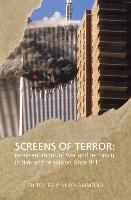
Screens of Terror

Screens of Terror: representations of war and terrorism in film and television since 9/11
Abramis Academic, September 2011. 338pp.
ISBN: 9781845495015. Order a copy here.

Edited by Philip Hammond, with contributions from: Matthew Alford • Martin Barker • Graham Barnfield • Michael Frank • Brigitte Nacos • Jack Holland • Hugh Ortega Breton • Joe Parker • Fran Pheasant-Kelly • Rebekah Sinclair • Mark Straw • Liane Tanguay • Guy Westwell • Bernd Zywietz

'No other collection to date has so acutely, intelligently and coherently demonstrated the inseparability of information, entertainment, policy and public perception as prime vectors of "war on terror" discourses and sensibilities as these are represented in Hollywood products. If I had to choose a single source to interrogate the limitless suffusion throughout Hollywood texts of Hegemonic gaze and subjectivity – regardless of genre, whether "critical" or "mainstream" – it would be Screens of Terror.'
- Oliver Boyd-Barrett, Professor of Journalism & Telecommunications, Bowling Green State University

'A compelling and timely interrogation of contemporary images of terror, this book has much to offer everyday consumers of popular films and television, be they students or casual readers.'
- Cynthia Weber, Professor of International Relations, University of Sussex

Wednesday, 29 June 2011

The End of Journalism

Andrew Calcutt and I have co-authored a chapter on 'Objectivity and the End of Journalism' in this book, hot off the press from Peter Lang.

Tuesday, 1 February 2011

Journalism Studies: A Critical Introduction


Published today and available here.


‘In a period of upheaval and change for journalism, this is a timely examination of the role and relevance of journalism studies in the academy. Scholarly and knowledgeable, while engaging in its arguments and accessibly written, Calcutt and Hammond have delivered an original and important book, which will be of value to all those who study journalism in the academy.’

Brian McNair, Queensland University of Technology, Australia

Thursday, 1 July 2010

Al-Qaida: Weder Gross Noch Clever

My review of Faisal Devji’s The Terrorist in Search of Humanity is published in German in this month’s Novo Argumente magazine. The English version is available here.

Tuesday, 20 April 2010

Emotional Governance? No Thanks!

My review of Barry Richards's book Emotional Governance is published in the current issue of Media, War and Conflict. You can read it - and the ensuing exchange between me and Richards - here (pdf - free access until 30 April 2010).

Monday, 22 March 2010

The war liberals love to love


My review of Saving Darfur is republished by Forth magazine in Ireland, and criticised on Fat Republic. The Fat Republic blogger claims that 'We live in [a world] that has millions of stupid and lazy people, the kind who need George Clooney to tell them about Darfur', and then says that 'so-called intellectuals' like me 'find it absolutely necessary to distance themselves from the ignorant masses'. Eh?

Friday, 12 March 2010

Monday, 1 March 2010

Why Darfur is everyone’s favourite African war

Rob Crilly’s new book is a fine work of reportage, challenging the myths and misunderstandings that surround Darfur and exposing how celebrity campaigners intensified the conflict.


‘I had come for an adventure’, says freelance foreign correspondent Rob Crilly of his time in Sudan. ‘Changing the world or saving Darfur were not part of my agenda.’ This characteristically frank and unpretentious comment captures the core strength of his book Saving Darfur: Everyone’s Favourite African War: its honesty.

That honesty means that Crilly refuses to ignore awkward facts that don’t fit the accepted narrative about the ongoing conflict in the Darfur region of Sudan. His fair-minded efforts to understand the motivations of the various actors involved ultimately lead him to challenge head-on the over-simplifications and distortions perpetuated by many Western journalists and Save Darfur campaigners. ‘By focusing on criminalising a government and making military intervention the top priority’, he argues, ‘[the Save Darfur Coalition] has made peace more elusive and increased the suffering of ordinary Darfuris’. His challenge springs, not from having some axe of his own to grind, but from the good reporter’s desire to really nail the story.

Crilly conveys the excitement and glamour of the foreign correspondent’s work, sometimes in unpromising circumstances. His most animated account of pursuing elusive leads and racing to scoop his rivals concerns the apparently trivial story of Gillian Gibbons, the British teacher in a Khartoum school who was arrested in 2007 for allowing her pupils to name a teddy bear ‘Mohammed’. When a snooty US colleague dismisses this light human-interest piece as a frivolous distraction from the serious stories needing to be told about Darfur, Crilly’s robust retort is: ‘I think you are talking bollocks.’ Insisting it is a ‘bloody great story’, Crilly recounts his ‘elation’ at being in the right place at the right time to reap fame and fortune from telling the tale. And, as he chases down the story, it turns out that this minor episode of cultural misunderstanding yields valuable insights into the workings of the Sudanese political system.

Gibbons was released after the intercession of two British Muslim peers, Baroness Sayeeda Warsi and Lord Nazir Ahmed: it was not lectures and threats that produced a result but ‘an appeal to common sense’, which offered President Omar al Bashir a face-saving way out instead of backing him in to a corner. Might this tell us something about the international approach to Sudan over Darfur, wonders Crilly – that shrill Western hectoring is actually counterproductive, making an already shaky regime feel even more threatened?

This is not to suggest that Crilly is in any way sympathetic to Bashir’s government. He frequently deplores its cruelty and vividly describes the suffering it has caused. What he does not do, however, is demonise it as an evil regime hell-bent on genocide. Instead, he suggests that Bashir has pursued a strategy of ‘counter-insurgency on the cheap’, in the words of Sudan scholar Alex de Waal. Crilly’s encounters with Sudanese soldiers reveal an unreliable military with doubtful loyalties – the army is full of Darfuris and also includes men from southern Sudan who until recently were themselves at war with the government. Recruiting proxy militia forces – the Janjaweed, or ‘devils on horseback’ – with promises of land and money, and giving them ‘the chance to loot and steal’, argues Crilly, ‘seemed to be the way a government with a thin grip on its vast country fought for survival’. Previous Sudanese presidents did much the same thing, he notes, and so did the British when they were Sudan’s imperial rulers.

Although this is a personal account, full of colourful anecdotes and wry asides, Crilly resists the temptation to put himself at the centre of the story. Since the early 1990s the fashion has been for Western journalists to use other people’s wars as a backdrop for their own existential voyages of moral self-discovery. Crilly’s more down-to-earth approach shuns the simplification and narcissism of that emotive and ‘attached’ style of journalism. Arriving in Sudan in September 2004, shortly after then US secretary of state Colin Powell had described the situation in Darfur as ‘genocide’, Crilly quickly finds that the war as understood in the West is ‘slipping out of focus’, as ‘black and white certainties’ start ‘mixing into grey’. Rather than seeking, as so many have done, to speak on behalf of the victims of conflict, Crilly’s aim is to ‘broadcast the real voices from the aid camps, the rebel villages and the Arab camel markets’.

Crilly meets the civilian victims of indiscriminate government bombing raids and brutal Janjaweed militiamen. But he also seeks out the voices of those who go ‘un-vox-popped’ in most reporting because they do not easily fit into reductionist accounts of a ‘genocide in Darfur’ perpetrated by ‘lighter-skinned Arabs’ against ‘black Africans’. He talks to the Arabic-speaking victims of rebel attacks, for example, and to former militia members who have defected to the rebels, discovering not an epic tale of Good versus Evil but a more prosaic and more complex story of shifting allegiances and ambiguous divisions. ‘Delving into context’, he finds, ‘showed that rational actors were at work, defending the interests of both sides’.

Equally, while he listens sympathetically to the rebels of the Sudan Liberation Army and the Justice and Equality Movement, he instinctively mistrusts their ‘glowing media profile’ and refuses to gloss over the rebels’ political fragmentation, their attacks on African Union peacekeepers, obstruction of humanitarian aid and recruitment of child soldiers. Unlike many of his colleagues, Crilly exercises proper journalistic scepticism when courted by media-savvy rebel groups who want to appeal to an international audience. Instead of simplifying the picture, his objective is to ‘tease out… loose ends, to complicate, and correct, the story of Darfur’.

Of course, complexity does not always go down well with newspapers eager for attention-grabbing headlines (Crilly wrote for The Times and the Daily Mail, among others). ‘Hmm, it’s a bit “Inside Baseball” isn’t it?’ was the response of editors who thought his attempts to present a more nuanced picture were too laden with esoteric detail. Sometimes they would even insert terms such as ‘black’ and ‘African’ into his articles in order to make them conform to the clear but misleading narrative that dominated news coverage. ‘[I]t was only after a couple of years covering the conflict that I began to object,’ he recalls, ‘pointing out that everyone in Darfur was black and African.’ While candid about his own mistakes, Crilly is highly critical of Western media coverage of Darfur – especially the simple-minded moralism of crusading journalists such as Nicholas Kristof of the New York Times.

The main focus of criticism, though, is the celebrity campaigners and human rights activists of the Save Darfur lobby – the target of the book’s ironic title. He pokes fun at some of their media-friendly stunts, such as the 2008 ‘Day for Darfur’ when celebrities smashed up toys to symbolise the suffering of Darfuri children – ‘Matt Damon took a baseball bat to a dolls’ house… Thandie Newton blowtorched a Barbie.’ But his criticism is deadly serious. It was the campaigners and ‘celebrity diplomats’ who did most to ‘[turn] Sudan’s desert conflict into the world’s favourite African war’, yet they did so only by simplifying and distorting it. In the process, Crilly concludes, far from ‘saving Darfur’ the campaigners have actually made things worse.

By exaggerating death tolls and depicting this ‘messy war’ as the ‘first genocide of the twenty-first century’, he argues, the activists and celebrities bear much of the responsibility for framing Darfur as a problem demanding drastic solutions – not quiet diplomacy but UN troops, not patient mediation but arrest warrants from the International Criminal Court (ICC). It is a timely point. The book’s publication this month coincides with the ICC’s decision – welcomed by the Save Darfur Coalition – to re-examine the possibility of adding the charge of genocide to its indictment against President Bashir. Coming just ahead of elections in Sudan scheduled for this spring, the court’s move to further criminalise the country’s president is unlikely to improve the chances of a negotiated peace settlement.

Even though it was ‘the search for adventure’ that took Crilly to Darfur, he says that in the end it also became his ‘favourite African war’. After five years of trying to get inside the minds of the rebels, militiamen and refugees, they got under his skin too. Crilly was honest enough to admit that ‘the more I travelled through Darfur the more it seemed everything I knew about it was wrong’, and to reappraise his preconceptions in light of experience. Save Darfur campaigners should read his book and do the same.

reprinted from: http://www.spiked-online.com/index.php/site/reviewofbooks_article/8239/

Thursday, 11 February 2010

Humanitarianism, war and celebrity culture


At the University of Brighton giving a talk about my chapter in this book.